What Is the Florida Surplus Funds List?
Many people search online hoping to find one master list of unclaimed money. The Florida surplus funds list does not actually exist as a single document in that sense. Understanding how these records really work can save families time and confusion.
Instead of one central list, surplus funds live across many separate county court systems. Recognizing this structure helps families search in the right places from the very beginning.
That feeling of discouragement often comes from expecting the wrong kind of tool altogether. Adjusting that expectation makes the entire search process far less frustrating.
Why the Florida Surplus Funds List Is Not One Document
Each Florida county maintains its own court registry for surplus funds. Consequently, no single statewide database lists every unclaimed foreclosure surplus in one place. Families must check with the specific county where their foreclosure occurred.
Because court systems operate independently, formats and search tools also differ somewhat. Therefore, a family with cases in two different counties would need to search twice. This structure often surprises people expecting one simple lookup tool.
How County Clerks Track Surplus Records
Clerks of court record every foreclosure sale result within their jurisdiction. Each entry typically includes the case number, sale amount, and any surplus generated. This information usually stays available through the clerk’s own record system.
Similarly, many clerks now offer searchable online databases for public access. These tools let families search by name, case number, or property address. Consequently, checking a specific county has become easier than it once was.
Record retention periods can also vary from one county to another. Some clerks maintain decades of searchable history online, while others keep only recent years available digitally. Consequently, older cases sometimes require a direct request to the clerk’s office instead of a simple online search.
Where the State Unclaimed Property System Fits In
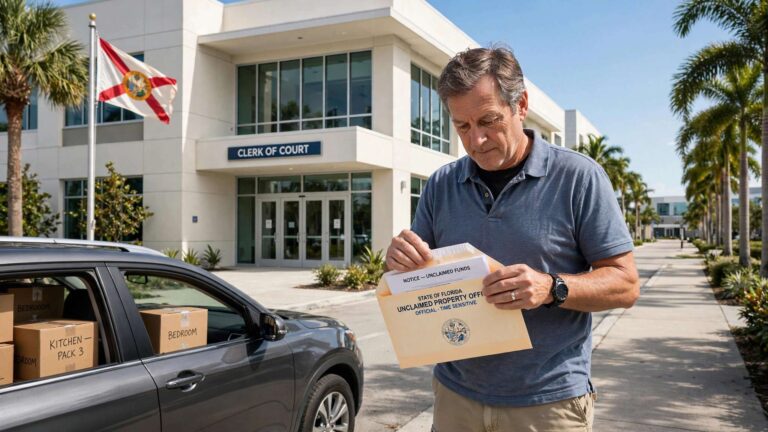
Once a surplus remains unclaimed past the deadline, it moves to a separate state system. This state level database covers many types of unclaimed property, not only foreclosure funds. Searching this system becomes relevant only after county deadlines pass.
Therefore, families should check both levels depending on their situation. A recent foreclosure likely still sits within the county court system. However, an older case might already appear within the state level records instead.
This two tiered structure explains why a single Florida surplus funds list can never fully replace checking both systems directly. Knowing which stage a particular case has reached saves considerable search time.
Warning Signs of Fraudulent List Services
Some websites claim to sell access to an exclusive Florida surplus funds list. Nevertheless, legitimate court and state records remain available to the public at no cost. Any site charging a fee just to view basic search results deserves real caution.
Additionally, scammers sometimes request sensitive personal information upfront before revealing any details. Legitimate government systems rarely ask for payment before confirming a genuine match exists. For this reason, treating unsolicited offers with skepticism protects families from unnecessary loss.
Verifying a website’s legitimacy takes only a moment. Official county and state websites typically end in a recognized government domain. Checking this detail before entering any personal information adds a simple layer of protection.
Searching These Records Yourself
Searching starts with identifying the correct county where the foreclosure took place. Most county clerk websites include a dedicated search tool for court records. Entering a name or case number usually returns relevant results quickly.
Checking the state unclaimed property database also takes only a few minutes. Basic identifying information often produces a clear match or no match at all. Therefore, families can complete this search without paying anyone for assistance.
What This Means for Families Statewide
Above all, understanding this decentralized system empowers families to search effectively. No single Florida surplus funds list will ever replace checking the right county directly. Most importantly, patience and accuracy matter more than finding one perfect shortcut.
Beyond that, sharing this knowledge helps protect neighbors and family members too. Many people fall for costly shortcuts simply because nobody explained the real process. Spreading accurate information remains one of the most valuable things a family can do.
Steps for Searching Florida Surplus Fund Records
- Identify the exact county where your foreclosure sale took place.
- Visit that county’s official clerk of court website directly.
- Search using your case number, name, or property address.
- Check the state unclaimed property database as a second step.
- Avoid any site requesting payment before confirming a genuine match.
- Gather identification documents in case a match appears.
- Contact the appropriate clerk directly with any remaining questions.
Key Takeaways
- No single Florida surplus funds list covers every county in one place.
- Each county clerk maintains its own separate surplus funds registry.
- Older unclaimed cases may eventually appear in the state system instead.
- Legitimate government records remain free and accessible to the public.
- Fraudulent sites often charge fees for information that is otherwise free.
- Searching both county and state systems covers most situations fully.
- Sharing accurate information helps protect families from costly scams.
Conclusion
The Florida surplus funds list many people search for does not exist as one simple document. Instead, accurate information lives across separate county and state systems. Understanding this structure helps families search confidently and avoid costly mistakes.
If you believe money may be owed to you, start with your own county records. The process takes patience, but it costs nothing to search properly. Above all, accurate information remains the best protection against confusion and fraud.