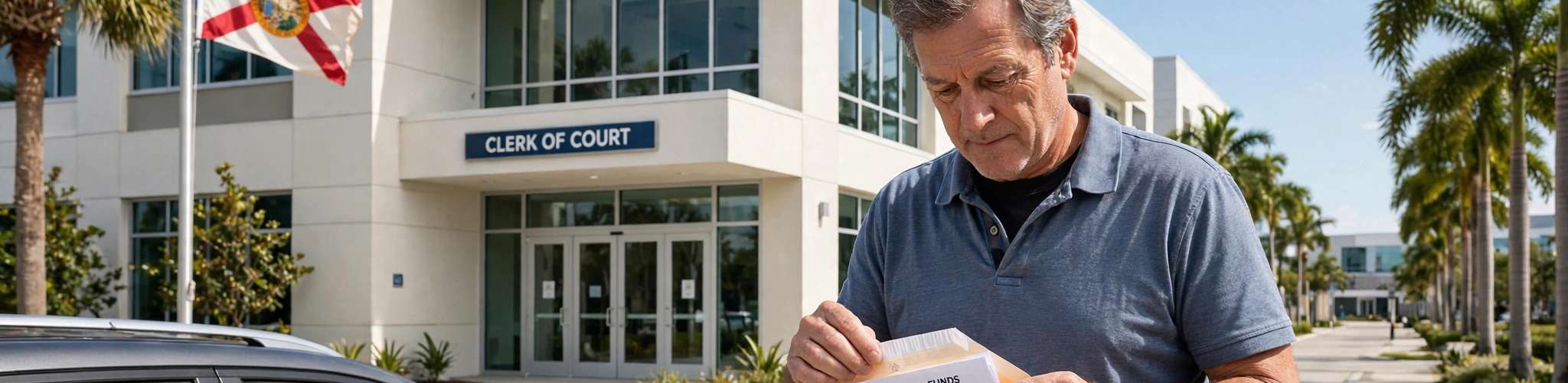
What Is Florida Surplus Funds Escheatment Law?
A foreclosure sale can leave money behind that nobody ever collects. Florida surplus funds escheatment law explains exactly what happens to that money once the deadline passes. Many families discover this law only after their claim window has already closed.
When nobody files a timely claim, the court cannot hold the surplus forever. Instead, the funds eventually transfer to the state. Understanding this process can still help a family recover what belongs to them.
This outcome surprises many people who assume a missed deadline ends all hope. In reality, Florida surplus funds escheatment law creates a second opportunity, not a dead end. Knowing how that opportunity works makes all the difference.
How Florida Surplus Funds Escheatment Law Works
Escheatment describes the legal transfer of unclaimed property to the state. Florida surplus funds escheatment law applies this same concept to foreclosure sale proceeds. Once the required claim period expires, the clerk of court sends the money forward.
Therefore, the surplus does not simply vanish once it leaves the court registry. Instead, it moves into a separate state system built specifically for unclaimed funds. This transfer creates a new, though narrower, path back to the rightful owner.
Why Funds Escheat to the State
Courts cannot hold money indefinitely without a clear legal process. Because a claim deadline exists, the law needs a final destination for funds nobody collects. Escheatment fills that gap in a structured way.
Additionally, this system protects the integrity of the court registry itself. Without escheatment, unclaimed funds would accumulate indefinitely across every county. Consequently, the law transfers responsibility to a single statewide system instead.
The Role of State Unclaimed Property Records
Florida maintains a centralized unclaimed property system for exactly this kind of situation. This system holds funds from many sources, not only foreclosure sales. Bank accounts, uncashed checks, and other assets can end up there too.
Because the system is centralized, families gain an easier starting point for their search. A single record search can reveal whether foreclosure surplus funds ended up in this system. This structure exists to make eventual recovery possible, not to make the money disappear.
State agencies that manage unclaimed property typically publish free online search tools. These tools allow anyone to check for funds under their own name at no cost. Furthermore, state agencies never charge a fee simply to look up whether money exists.
Searching for Escheated Funds Step by Step
Searching for escheated funds starts with basic identifying information. A full name, a former address, and an approximate date of the foreclosure sale all help narrow the search. Most searches take only a few minutes to complete.
Similarly, checking under previous names or spelling variations can matter. Court records sometimes contain small errors or outdated information. For this reason, trying multiple name variations improves the chance of finding a match.
Family members can also assist with this search. A sibling, adult child, or spouse often remembers details that slip a claimant’s mind. Working together on the search frequently produces faster and more accurate results.
What Happens After You File a Claim With the State
Filing a claim with the state follows a different process than filing with the court. First, the claimant submits documentation proving identity and ownership. Second, the state reviews that documentation before releasing any funds.
Nevertheless, this process can take longer than a court based claim. Because the state handles claims from many sources, review times vary. Patience during this stage often pays off with eventual recovery.
Communication with the reviewing office also helps move things along. A brief follow up call or email can confirm that documentation arrived correctly. Consequently, small proactive steps often shorten an otherwise uncertain waiting period.
Timing Considerations After Escheatment Occurs
Above all, escheatment does not mean a family has lost the money forever. However, waiting even longer after this point adds unnecessary complexity. Additional documentation requirements can appear the longer a claim remains unfiled.
Most importantly, families should not assume escheated funds are gone for good. Beyond that, acting sooner rather than later keeps the recovery process simpler. Florida surplus funds escheatment law still gives families a real chance to reclaim their money.
Record keeping becomes especially valuable during this stage. Keeping copies of foreclosure paperwork, prior addresses, and identification documents saves time later. Families who organize these records early often move through the state process more smoothly than those who start from scratch.
Steps for Recovering Escheated Surplus Funds
- Confirm the original foreclosure sale date and case number.
- Search the state unclaimed property database using your name.
- Try alternate spellings or previous addresses in your search.
- Gather identification documents that confirm your identity.
- Collect any ownership records tied to the original property.
- Submit the required claim form to the appropriate state office.
- Follow up periodically until the state confirms a final decision.
Key Takeaways
- Florida surplus funds escheatment law governs unclaimed foreclosure money after deadlines pass.
- Escheated funds move from the court registry into a statewide system.
- The state unclaimed property system holds many types of unclaimed assets.
- Searching by name and address can reveal escheated foreclosure funds.
- Claims filed with the state require proper identification and documentation.
- Review times with the state often take longer than court based claims.
- Escheatment does not mean a family has permanently lost their money.
Conclusion
Florida surplus funds escheatment law can feel discouraging at first glance. However, it still leaves a real door open for families willing to search. Understanding this process turns a missed deadline into a manageable next step.
If a foreclosure sale happened years ago, checking is still worthwhile. The state unclaimed property system exists precisely for situations like this one. Above all, persistence at this stage can still lead to genuine financial recovery.